

I In today's fast-paced business environment, time is one of the most valuable resources. Yet, many companies, especially small and mid-sized businesses, still rely on outdated, manual methods to handle expenses. From collecting paper receipts to approving reimbursements via email chains, traditional expense management is not only time-consuming but also prone to errors and inefficiencies.
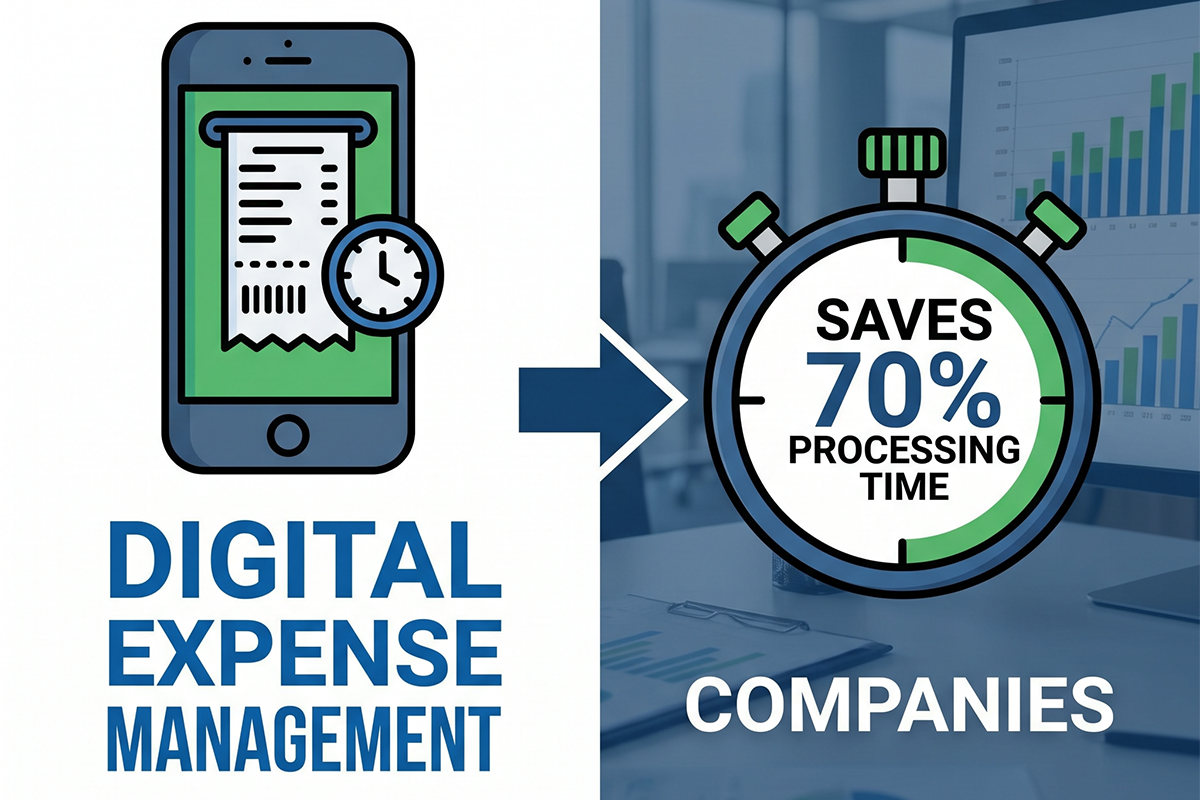
Digital expense management is changing that landscape. By automating repetitive tasks, streamlining workflows, and offering real-time insights, companies can reduce expense processing time by up to 70%. This blog explores how and why that transformation happens, along with the key components that make it possible.
What is Digital Expense Management?
Digital expense management refers to the use of software and tools to record, track, approve, and analyze business expenses electronically. It eliminates the need for paper-based processes and manual data entry by integrating features like:
- Receipt scanning and OCR (Optical Character Recognition)
- Automated expense categorization
- Real-time expense tracking
- Workflow automation for approvals
- Integration with accounting systems and payment platforms
The goal is simple: make expense handling faster, more accurate, and more transparent.
The Problem with Traditional Expense Management
Before understanding the time savings, it's important to see where companies lose time in the first place.
1. Manual Data Entry
Employees often have to manually input expense details into spreadsheets or forms. Finance teams then re-enter the same data into accounting systems. This duplication wastes hours every week.
2. Paper Receipts and Documentation
Collecting, organizing, and storing physical receipts is tedious. Missing receipts can delay reimbursements and create compliance issues.
3. Slow Approval Cycles
Approvals often happen over emails or physical signatures. If a manager is unavailable, the process gets delayed, causing bottlenecks.
4. Error-Prone Processes
Manual systems are highly susceptible to errors, incorrect entries, duplicate claims, or policy violations, which require additional time to identify and fix.
5. Lack of Real-Time Visibility
Finance teams often lack real-time insights into company spending, leading to delays in decision-making and reporting.
How Digital Expense Management Saves 70% Processing Time
1. Automated Data Capture Eliminates Manual Entry
Modern expense management tools use OCR technology to scan receipts and automatically extract details like date, amount, vendor, and category.
Time saved:
- No need for manual typing
- Reduces data entry time by up to 80%
Employees simply upload a photo of the receipt, and the system does the rest.
2. Real-Time Expense Recording
Instead of waiting until the end of the week or month, employees can record expenses instantly through mobile apps.
Benefits:
- No backlog of expenses
- Faster submission and processing
- Improved accuracy due to immediate entry
Time saved: Real-time updates eliminate the need for batch processing, cutting down delays significantly.
3. Automated Approval Workflows
Digital systems allow companies to set predefined approval hierarchies and rules. Expenses are automatically routed to the appropriate manager for approval.
Key features:
- Multi-level approvals
- Auto-approval for small expenses
- Notifications and reminders
Time saved: Approval time can drop from days to hours, or even minutes in some cases.
4. Policy Enforcement Reduces Rework
Expense policies can be built directly into the system. If an expense violates company rules (for example, exceeding limits), it gets flagged instantly.
Advantages:
- Prevents non-compliant claims
- Reduces back-and-forth communication
- Minimizes corrections and re-submissions
Time saved: Less time spent on reviewing and correcting errors.
5. Seamless Integration with Accounting Systems
Digital expense platforms integrate with accounting software, eliminating the need to manually transfer data.
Examples of integration:
- ERP systems
- Payroll software
- GST compliance tools
Time saved: Finance teams no longer need to reconcile data manually, saving hours of work each week.
6. Faster Reimbursements via Digital Payments
With integrated payment systems (like UPI or direct bank transfers), reimbursements can be processed quickly.
Benefits:
- Employees get paid faster
- Reduced administrative workload
- Improved employee satisfaction
Time saved: Cuts down reimbursement cycles from weeks to a few days, or even same-day processing.
7. Centralized Dashboard for Better Visibility
Digital platforms provide a unified dashboard where finance teams can monitor all expenses in real time.
Insights available:
- Department-wise spending
- Employee expense patterns
- Budget vs actual comparison
Time saved: No need to compile reports manually. Data is available instantly.
8. Reduced Audit Time and Better Compliance
Audits become much easier with digital records. Every transaction is stored with proper documentation and timestamps.
Advantages:
- Easy retrieval of records
- Automated audit trails
- Better compliance with tax regulations
Time saved: Audit preparation time can be reduced by more than 50%.
Additional Benefits Beyond Time Savings
1. Cost Reduction
Less manual work means reduced administrative costs and fewer errors that could lead to financial losses.
2. Improved Accuracy
Automation reduces human error, ensuring cleaner and more reliable financial data.
3. Enhanced Employee Experience
Quick reimbursements and easy expense submission improve employee satisfaction.
4. Better Financial Control
Real-time insights help companies control budgets and make informed decisions.
5. Scalability
As businesses grow, digital systems can handle increased volume without adding extra workload.
Key Features to Look for in a Digital Expense Management System
If you are planning to adopt a digital solution, look for these essential features:
- Quickly accessible expense tracking
- OCR-based receipt scanning
- Customizable approval workflows
- Integration with accounting and payment systems
- Real-time reporting and analytics
- GST compliance support (for Indian businesses)
- Secure cloud storage
Best Practices for Successful Implementation
1. Define Clear Expense Policies
Before implementing a system, ensure your expense policies are well documented.
2. Train Employees
Provide proper training to ensure smooth adoption across the organization.
3. Start Small, Then Scale
Begin with one department or function and gradually expand.
4. Monitor and Optimize
Use analytics to identify inefficiencies and continuously improve processes.
Conclusion
Digital expense management is no longer a luxury. It is a necessity for modern businesses. By automating repetitive tasks, reducing errors, and providing real-time visibility, companies can save up to 70% of the time spent on expense processing.
The result is not just operational efficiency, but also better financial control, improved compliance, and enhanced employee satisfaction. In a competitive business environment, adopting digital solutions can give companies a significant edge.
If your organization is still relying on manual expense processes, now is the perfect time to make the switch. The time you save today can be invested in growing your business tomorrow.